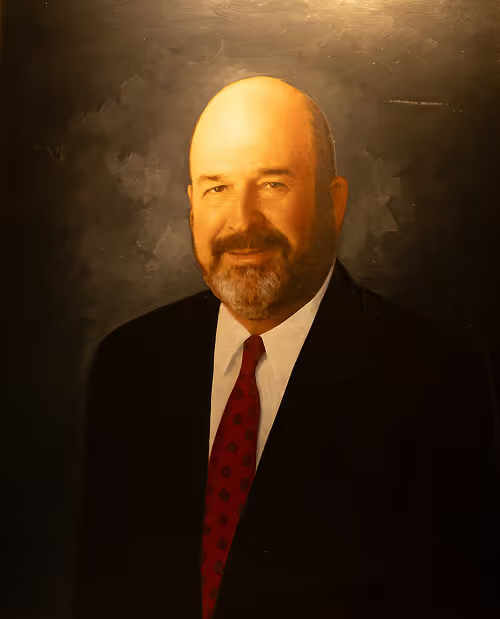
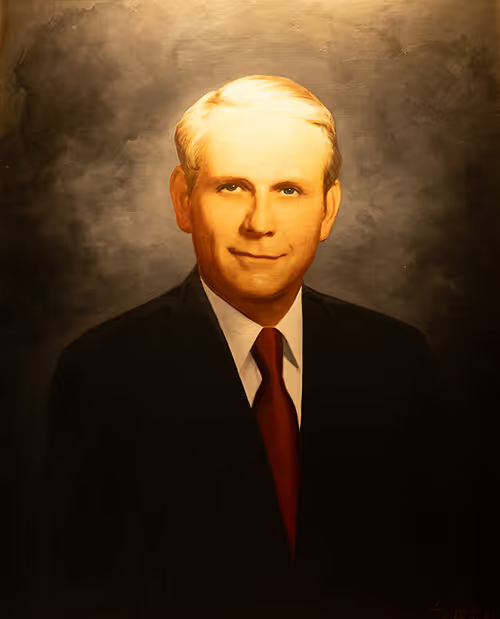
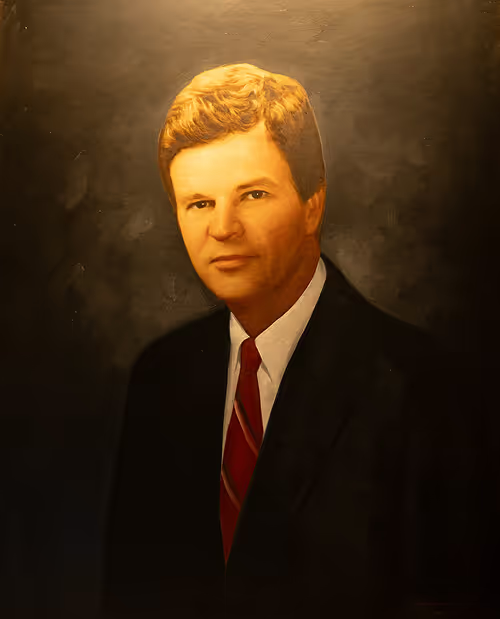
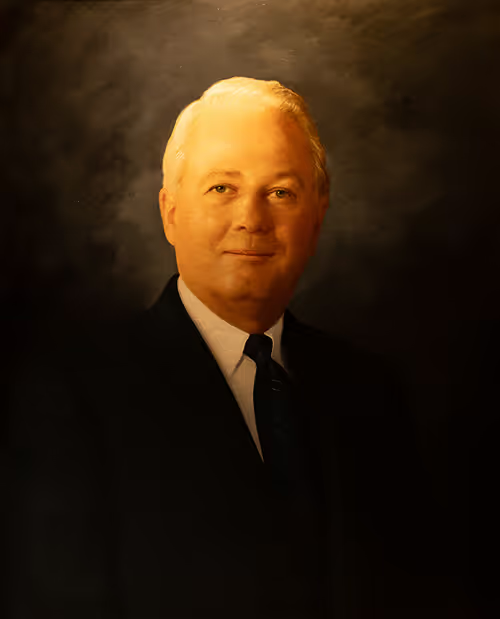
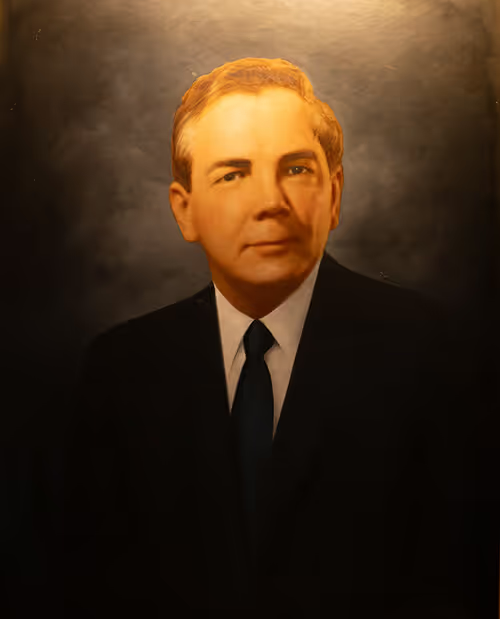
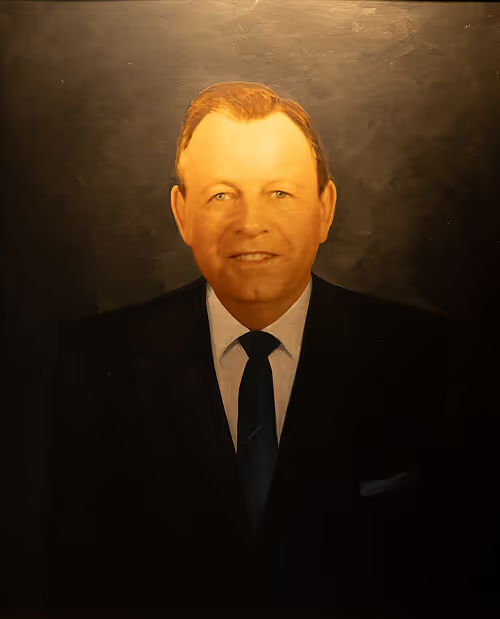
John McKeithen served as Governor of Louisiana from 1964 to 1972, becoming the first twentieth-century governor to serve two consecutive terms. His administration successfully began school integration, protecting civil rights activists and ensuring 200,000 children attended integrated public schools by the end of his term. McKeithen also focused on economic development, attracting industry to the state and supporting the construction of the Superdome for the New Orleans Saints. He pursued government reform by improving the state code of ethics, extending civil service, and supported a constitutional amendment allowing governors to serve consecutive terms.
David "Dave" C. Treen was elected Governor of Louisiana in 1979, becoming the first Republican to hold the office since Reconstruction. As governor, he worked to improve education by raising teacher pay and establishing the Louisiana School for Math, Science and the Arts at Northwestern State University. His administration also created the Department of Environmental Quality, reformed workers’ compensation, improved the Code of Criminal Procedure, and resumed capital punishment. Treen signed a law requiring the teaching of “creationism science,” which was later struck down by the U.S. Supreme Court, and he made efforts to strengthen historically black colleges and universities while appointing more Black officials to public office than any prior governor.
Charles E. "Buddy" Roemer, III was elected Governor of Louisiana in 1988 after leading a crowded primary and taking office following Edwin Edwards’ withdrawal. During his term, he increased teacher pay, strengthened the Department of Environmental Quality, and toughened campaign finance laws. His efforts to revamp the state tax system and advance education reform were largely blocked by the legislature. Late in his term, Roemer switched to the Republican Party but was unable to secure broad support, ultimately finishing third in his reelection bid in 1991.
He was elected as a delegate to the Louisiana Constitutional Convention in 1972.
Known for his quick wit and charm, Edward left a lasting mark on Louisiana by championing a constitutional convention, reforming the severance tax on crude oil, and helping to bridge the racial divide that had separated Louisianans for much of the twentieth century. Over the course of his career, he was the only political leader in the nation to serve in all three branches of government: executive, legislative, and judicial, across all three levels: local, state, and national. He also holds the distinction of being the only four-term governor in Louisiana’s history.
Murphy James “Mike” Foster Jr. never set out to become Governor, but his frustration with the lack of responsiveness in state government pushed him into politics. Once in office, he quickly became a popular leader, guiding Louisiana to lead the nation in debt reduction and eliminating the state sales tax on food and most utilities. He is also remembered for creating the Taylor Opportunity Program for Students (TOPS) scholarship, establishing the Louisiana Community and Technical College System, and playing a key role in securing an NBA franchise for the state.
Mike Foster's grandfather, Murphy James Foster Sr., served as Governor of Louisiana from 1892-1900.
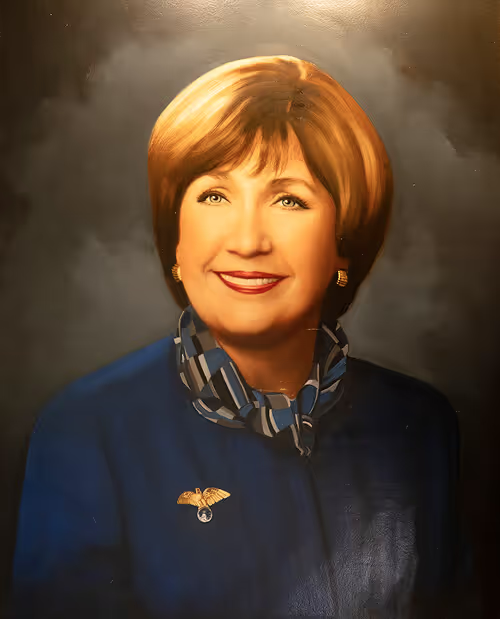
Kathleen Babineaux Blanco made history in 2004 as the first woman elected Governor of Louisiana. Her administration focused on raising educational standards, expanding access to children’s health insurance, reforming the juvenile justice system, and launching one of the most ambitious economic development programs in state history, attracting nearly $24 billion in new investments. In 2005, she led Louisiana through Hurricane Katrina, overseeing the evacuation of more than a million residents, commanding the largest deployment of National Guard troops by any governor, and securing billions in federal aid for recovery and rebuilding. She also created the Coastal Protection and Restoration Authority to strengthen Louisiana’s wetlands and defenses against future storms.
Blanco was often called the "Queen Bee" because in her early days as governor a legislator who promised to support her on a tax bill opposed her instead. She and the speaker of the house stripped him of his legislative committee chairmanship. The representative called a news conference deriding Blanco, calling her the “Queen Bee.” A few weeks later Blanco invited the representative and several of his allies into her office. While they were expecting a lecture, with a smile on her face, Blanco instead pulled out bee-shaped lapel pins and informed them that they were being inducted into the “Order of the Queen Bee.”
"She understood better than most [that] if you want to turn an enemy into a friend, show them love and respect when no one else thinks you should and it will work every time,” the representative later recalled to a reporter.
Jimmie Davis, a country-western singer best known for the song “You Are My Sunshine,” served two nonconsecutive terms as Governor of Louisiana. During his administrations, he oversaw the construction of the Sunshine Bridge over the Mississippi River, authorized the building of the new Governor’s Mansion, and supported the development of the Toledo Bend Reservoir on the Sabine River. He was inducted into the Country Music Hall of Fame in 1972 and remained active in public life until his death in 2000 at the age of 101.
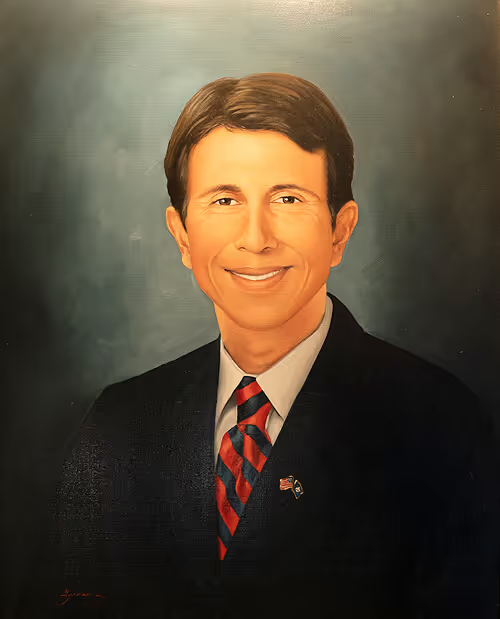
Piyush "Bobby" Jindal was elected in 2007 as Louisiana’s youngest governor since Reconstruction and the nation’s first Indian American governor. His administration emphasized fiscal conservatism, repealing the Stelly Plan and resisting tax increases while facing significant budget shortfalls that affected higher education and health care. He expanded school choice through a statewide voucher program, though it was later restricted by court rulings. Jindal also led the state’s response to the 2010 Deepwater Horizon oil spill, pressing federal authorities for stronger action and proposing coastal protection measures.
A rising figure in national politics, he was chosen to deliver the Republican response to President Barack Obama’s 2009 State of the Union address and later published a memoir, Leadership and Crisis, reflecting on his time as governor.
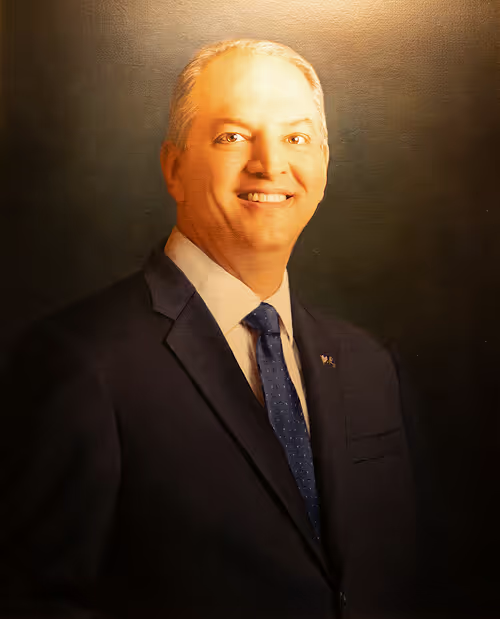
John Bel Edwards served as Governor of Louisiana from 2016 to 2024. During his tenure, he expanded Medicaid, stabilized the state budget, reformed criminal justice policies, and led the state through major emergencies, including Hurricanes Laura and Ida and the COVID-19 pandemic. He prioritized coastal protection and climate resiliency, overseeing $15.4 billion in coastal restoration projects and approving Louisiana’s first Climate Action Plan in 2022.
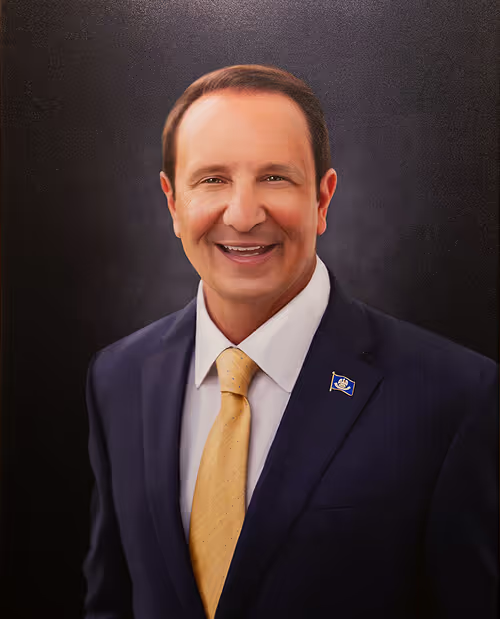
Jeff Landry was elected Governor of Louisiana in 2023.
His administration has prioritized pro-growth policies, moving the state’s economic outlook from 31st to 18th and securing more than $50 billion in new investments. He has advanced major education reforms by expanding school choice, empowering parents, and helping Louisiana achieve its highest student testing scores in a generation. On public safety, Landry has championed law enforcement and implemented reforms that contributed to a 43% decline in violent crime in New Orleans.